As health and wellness take center stage across all sectors of real estate, developers are increasingly focusing on healthy infrastructure as a building upgrade and a lifestyle amenity. With younger generations placing a greater emphasis on health and well-being than previous generations, demand continues to rise for indoor environments that actively enhance quality of life. As a result, the wellness real estate market has become the fastest-growing segment of the broader wellness economy, prompting developers to rethink how buildings can support long-term resident health.
Jamestown LP is a design-focused, vertically integrated real estate investment manager and service provider with over 40 years of experience and a mission to create places that inspire. With the guiding principles of integrity, excellence, and innovation, they listen to and support their tenants, creating quality spaces that deliver an outstanding experience. With an impressive portfolio including One Times Square in New York, Industry City in Brooklyn, and Ghirardelli Square in San Francisco, Jamestown continues to expand across the US.
.jpg)
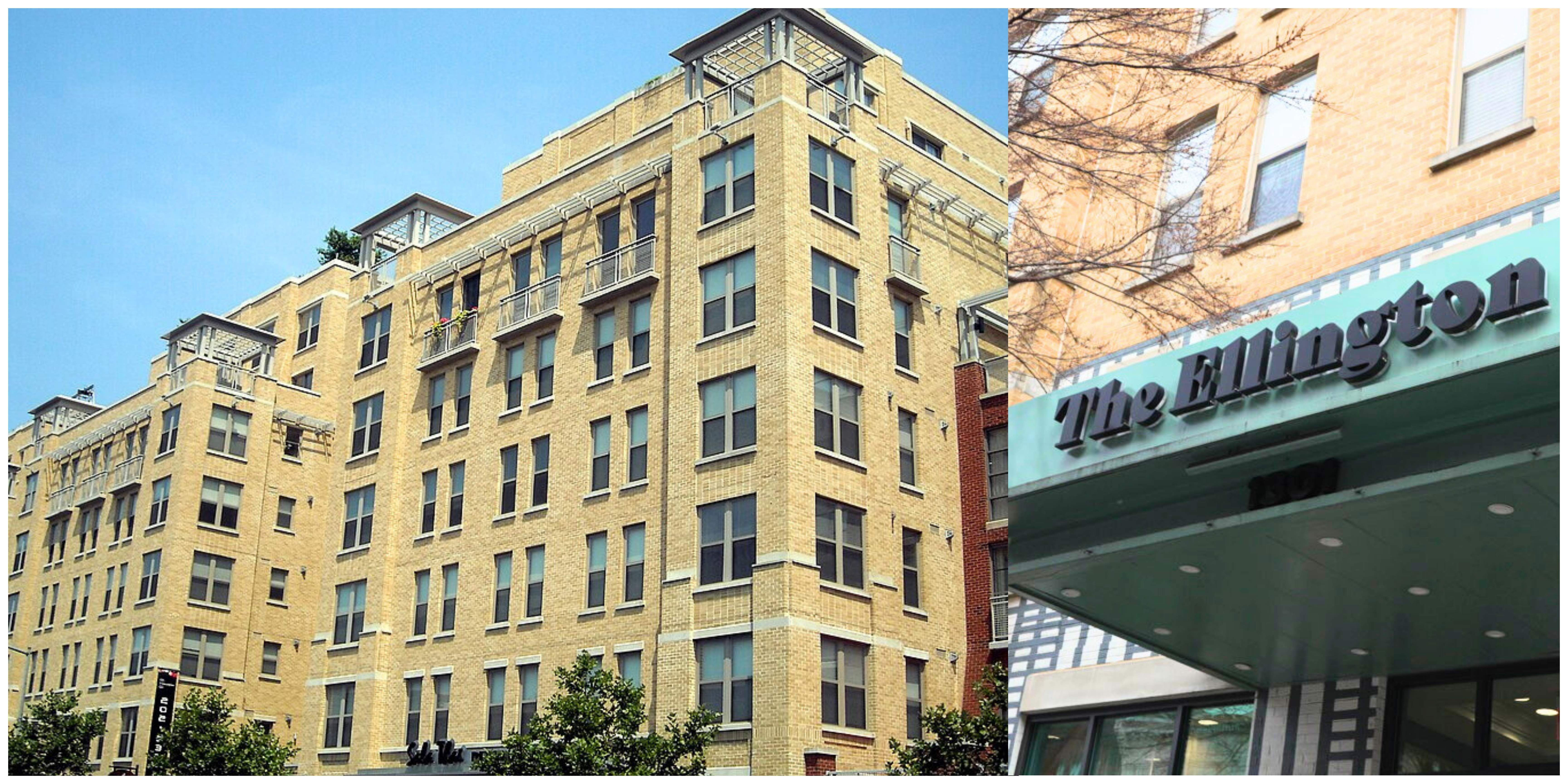
Recognizing the growing demand for innovative, health-focused amenities, Jamestown partnered with Clear Inc., a growing leader in UV-based water treatment technology, to bring improved water quality to one of its residential properties in Washington, D.C.: The Ellington (Figure 1). Located at 1301 U Street NW, this premier residential property houses 190 units and over 15,000 square feet of retail space. With this installation, The Ellington has become the first residential building in the city to offer centralized UV-treated water as a building-wide amenity.
Completed in the fall of 2025, the UV system installation at The Ellington represents a full-package deployment by Clear. Installed over two phases, mechanical integration of the system was completed on September 30th, followed by final electrical integration and commissioning on October 21st. After assessing the flow rates and water demand of the building, Clear’s engineers selected the RS104 HODTM (Hydro-Optic Disinfection) UV reactor, by Atlantium, as the optimal solution for the property.

Clear’s team designed and installed a new 4-inch copper line to accommodate the HOD UV RS104 system in a vertical orientation; an approach that maximized space while maintaining clear access for future maintenance (Figure 2). A bypass pipeline equipped with gate valves was incorporated, allowing servicing of the HOD UV system without interrupting water flow to the building. As a retrofit installation, this project demonstrates the ease and flexibility with which Clear’s UV technology can be integrated into an existing, busy pump room. With adaptable design configurations, Clear’s centralized UV systems are well-suited for seamless retrofit implementation in existing buildings.
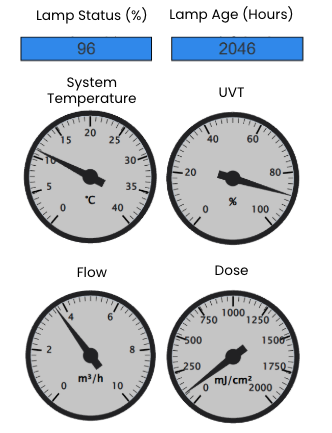
Additional components installed included a flow meter upstream of the HOD UV system to regulate UV dose in real time based on water flow (Figure 3). Clear’s engineers also included sampling valves both upstream and downstream to facilitate water quality testing. Remote monitoring hardware was also installed and tested to ensure real-time tracking of system health and performance, including flow, UV transmittance, dose, and lamp status (Figure 4).
.jpg)
On commissioning, the system underwent a full inspection to verify correct installation of all electrical and plumbing connections. The lamp was ignited, and sensors measuring flow, temperature, UVT, and UVI were confirmed to be functioning within expected parameters. A 24-hour follow-up check ensured the system was leak-free, transmitting data successfully, and operating as designed.
To validate the system’s performance, Clear conducted both microbiological and chlorine testing before and after HOD UV treatment. The results were notable: heterotrophic plate count (HPC) testing showed a 10X reduction in bacterial load—from 0.02 CFU/mL before treatment to 0.002 CFU/mL after (Figure 5). Although incoming water from the municipal supply showed relatively low bacterial levels at the time of sampling, this reduction confirms system efficacy and provides a robust layer of biological protection. Ongoing testing is planned to capture seasonal fluctuations in water quality.

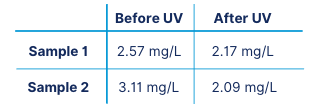
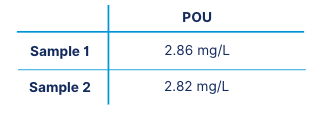
Chlorine testing further illustrated the system’s impact (Table 1 and 2). In sample 1, monochloramine levels dropped from 2.57 mg/L to 2.17 mg/L, while sample 2 showed an even greater reduction in monochloramine, from 3.11 mg/L to 2.09 mg/L. Clear’s scientists also measured chloramine levels at the point-of-use, and found that sufficient disinfectant residual is maintained throughout the system to support ongoing secondary disinfection in premise plumbing. The reduced levels of monochloramine measured after the UV system improves smell and taste of the water, and reduces corrosion in premise plumbing, while still maintaining safe disinfectant levels throughout the building.
As part of the system rollout, Clear also led a resident engagement campaign to help introduce the new water purification system and highlight its benefits. The team hosted a one-day event in the building’s lobby with informational materials, giveaways, and refreshments. A catered lunch and presentation gave residents the opportunity to ask questions and learn about their new amenity. Small group tours of the pump room were offered, giving residents a behind-the-scenes look at the installed system.
This project demonstrates role of water quality as a core wellness feature in modern residential housing. This centralized UV reactor is more than just an infrastructure upgrade: it brings microbiological safety right to the tap, prevents biofilm accumulation in premise plumbing, and improves residents’ daily experience with the water they drink, cook, and bathe with. By adding this building-level firewall against waterborne pathogens, Jamestown is making a powerful and impactful investment into the comfort and long-term health of its residents at The Ellington.
The Ellington installation further illustrates how seamlessly Clear’s advanced UV water technology integrates with thoughtful, health-centered building design. It reinforces the role of UV water purification not only as a safeguard against microbial threats, but as a tangible amenity that adds value, comfort, and peace of mind. For developers like Jamestown, this project highlights the simplicity and affordability of retrofitting a centralized UV system into existing buildings, and underscores the lasting impact of investing in infrastructure in making a real difference that residents appreciate and value.
At Clear, we believe that everyone deserves access to safe, high-quality water. By partnering with Jamestown, we are advancing that vision: one resident, one building, one community at a time.



.png)