Access to safe drinking water is a fundamental human right. Yet across the United States, aging infrastructure and decades of underinvestment continue to create water quality risks, especially in low-income communities. For low-income residents, the consequences of waterborne illness are more severe, as they often face barriers such as limited access to healthcare, lack of paid sick leave, and an inability to afford alternative water quality solutions like bottled water or in-home filtration systems.
These systemic challenges mean that vulnerable populations frequently bear the greatest burden of inadequate water infrastructure. Ensuring reliable, high-quality water at the building level is an essential step in protecting both public health and housing equity. Recognizing this need, an affordable housing developer previously partnered with Clear to improve water quality in several of their properties. In this project, they furthered that relationship by expanding the water quality initiative to another residential community of theirs, in Pittsburgh, Pennsylvania.
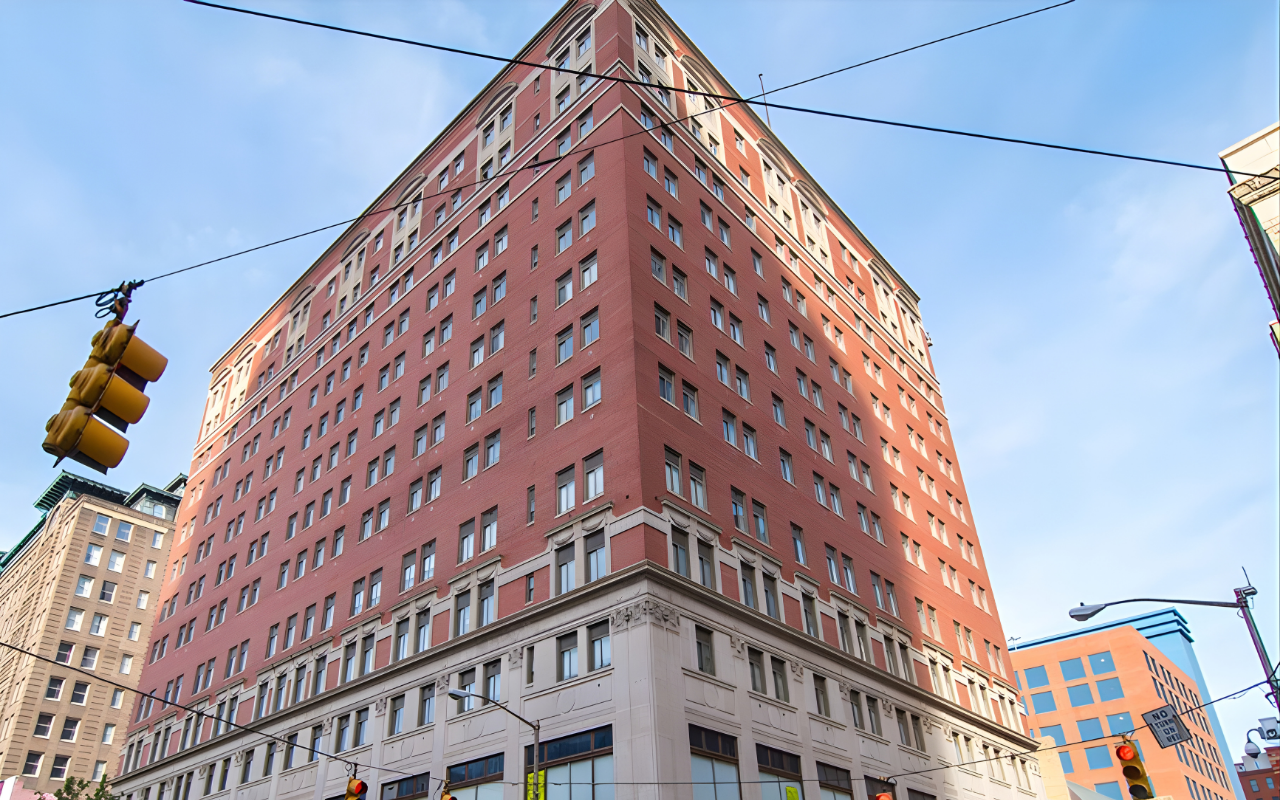
The property in this project is a 13-story multifamily high-rise originally constructed in 1927 as a hotel. Today, the building contains 191 residential units along with two floors of retail space at street level. It is currently undergoing a major rehabilitation project aimed at preserving long-term affordability while modernizing critical building infrastructure. As part of these improvements, the development team prioritized upgrading the building’s water infrastructure to better protect residents.
Having previously collaborated with Clear on other affordable housing projects across the United States, the developer sought to expand access to improved water quality in this community by installing a centralized UV water purification system.
To provide full building protection, Clear installed an Atlantium RS104 medium-pressure UV water purification system at the building’s point-of-entry, ensuring that all incoming municipal water is treated before entering the building’s plumbing system.
The installation was designed to integrate seamlessly into the building’s existing infrastructure while minimizing disruption to residents.
Key installation features included:
To minimize water service interruptions, Clear’s installation team first constructed the bypass line, allowing building water supply to continue uninterrupted while the UV system was integrated. Once installation was complete, the modem successfully connected to the remote monitoring platform, enabling real-time tracking of system performance, including lamp status, power levels, and operational parameters. Following the completion of plumbing and electrical work, Clear engineers commissioned the UV system on December 11, 2025.
The commissioning process began with a comprehensive pre-power inspection to verify that all electrical components were properly installed. After confirming system readiness, circuit breakers were energized and power was supplied to the UV reactor. The UV lamp was ignited and monitored during the warm-up period to confirm stable operation and current draw. Engineers then evaluated system performance by verifying the functionality of all integrated sensors, including:
Sensor outputs were confirmed to be operating within expected ranges.
.JPG)
Flow conditions were simulated using the downstream sampling port to calibrate the flow measurement and control subsystem. Following successful calibration, the system was transitioned from manual operation into fully automatic operational mode. The monitoring software was then reviewed to verify accurate data acquisition, parameter reporting, and alarm functionality through the remote monitoring dashboard. All system functions operated within specification, and the system was confirmed to be fully operational.
Following commissioning, Clear conducted water sampling from both the pre-UV and post-UV sampling ports to verify treatment performance.
Chlorine strip tests produced the following results:
.png)
The observed reduction in chlorine levels contributes to improved water taste and may also help reduce corrosion within the building’s internal plumbing. Additional post-installation inspections confirmed:
All newly installed piping was insulated, taped, and wrapped to protect against heat loss, condensation, and potential moisture-related damage.
To ensure long-term reliability, the system is connected to Clear’s remote monitoring platform. This platform allows engineers to monitor system performance in real time, tracking operational parameters and automatically detecting potential issues before they affect water quality. For both residents and property management, this means the building’s water treatment system is continuously monitored, ensuring safe water at every tap and shower in the building.
%20(2).png)
Today, the UV purification system provides 191 low-income families with an added layer of protection against microbiological contaminants. In communities where residents may face limited healthcare access and fewer resources to manage illness, improvements in water quality can have a considerable impact on overall health and well-being. The system also treats water supplied to the building’s retail spaces, extending the benefits of safer water beyond residents to the broader community.
This installation is more than just an infrastructure upgrade. It represents the commitment by the development team to prioritize resident health, safety, and dignity. Through partnerships like this, innovative UV technologies are helping redefine what healthy infrastructure looks like in affordable housing, and demonstrating that access to clean, reliable water should never be a privilege.
It should be a guarantee.



.png)


